First Impressions
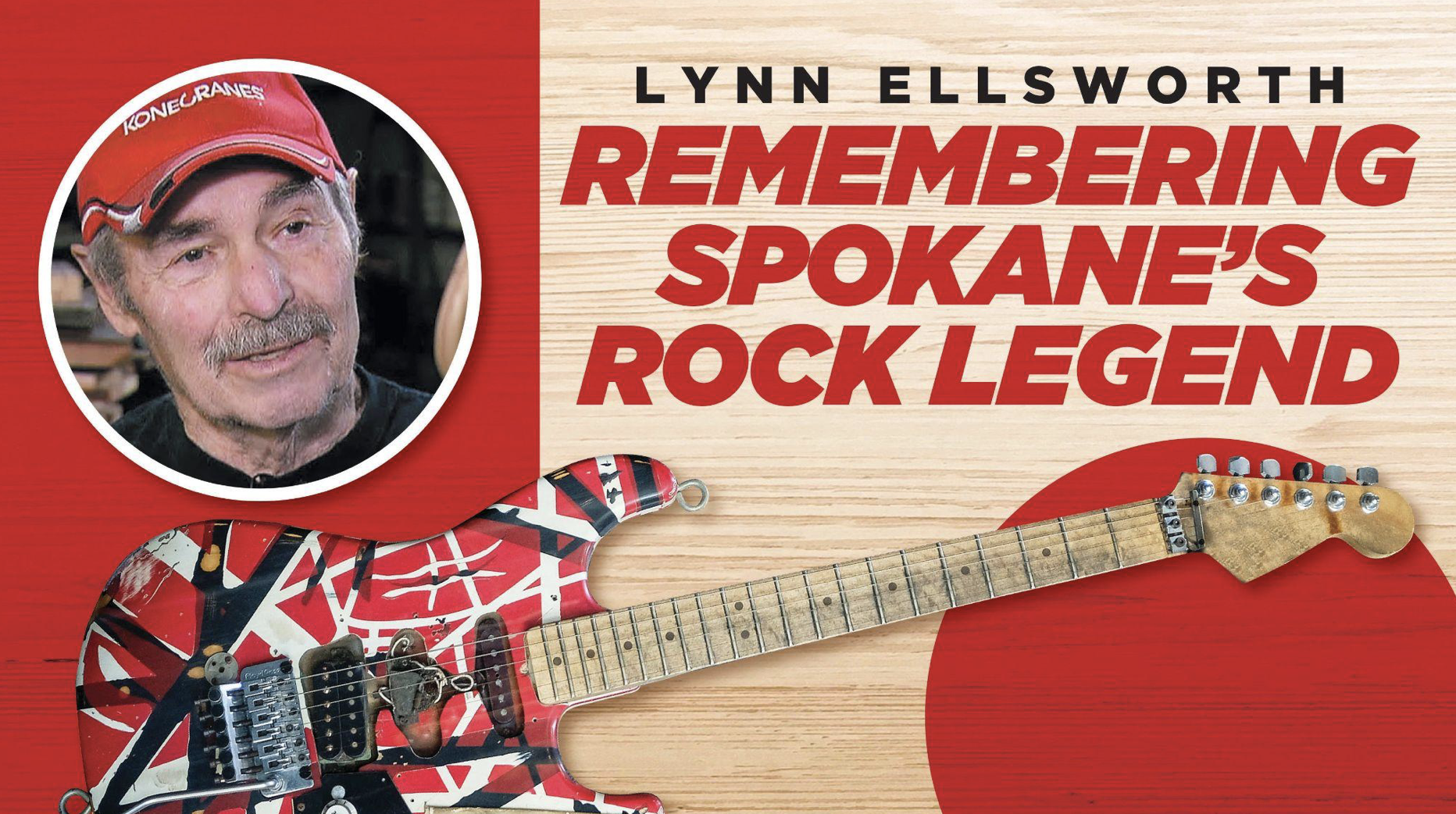
Lynn learned carpentry from his dad and was making furniture when Wayne Charvel asked him to build a guitar body using exotic wood. The result? A great first impression.
During the early 1970s, Lynn’s friend, schoolmate, and bandmate, Wayne Charvel, asked him to build a guitar body from rosewood. From that simple request, Lynn’s first guitar business, First Impressions, was born. Little did these young Southern California craftsmen know the profound impact they would have on music history.
Wayne Charvel’s request proved to be one of those seemingly small moments that would ultimately help shape an entire era of guitar innovation. When Lynn Ellsworth began working on that piece of rosewood, he wasn’t simply building a guitar body for a friend. He was laying the foundation for what would later become Boogie Bodies and Warmoth Custom Guitars. Together, these pioneering companies helped fuel the boutique guitar-parts revolution and played a significant role in defining the tone, appearance, and customization of modern electric guitars.
Boogie Bodies
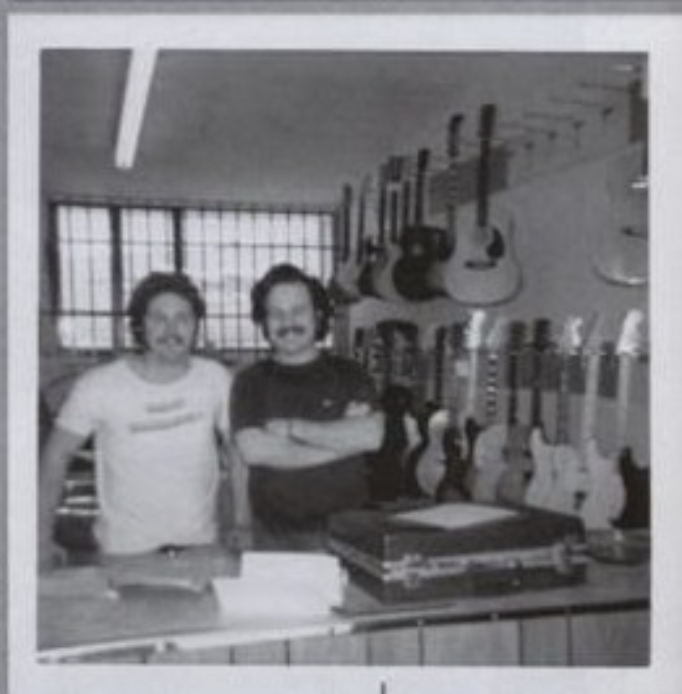
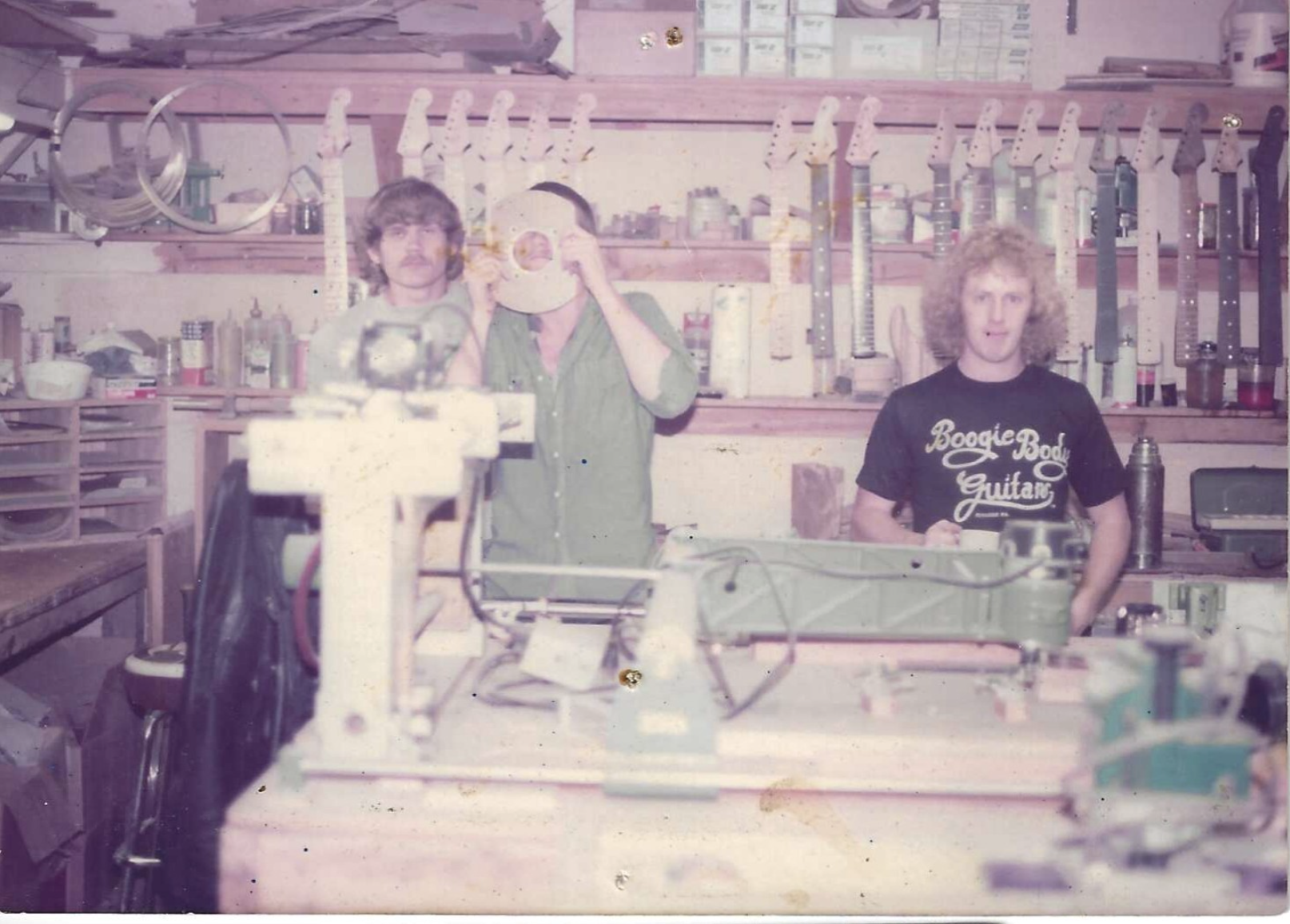
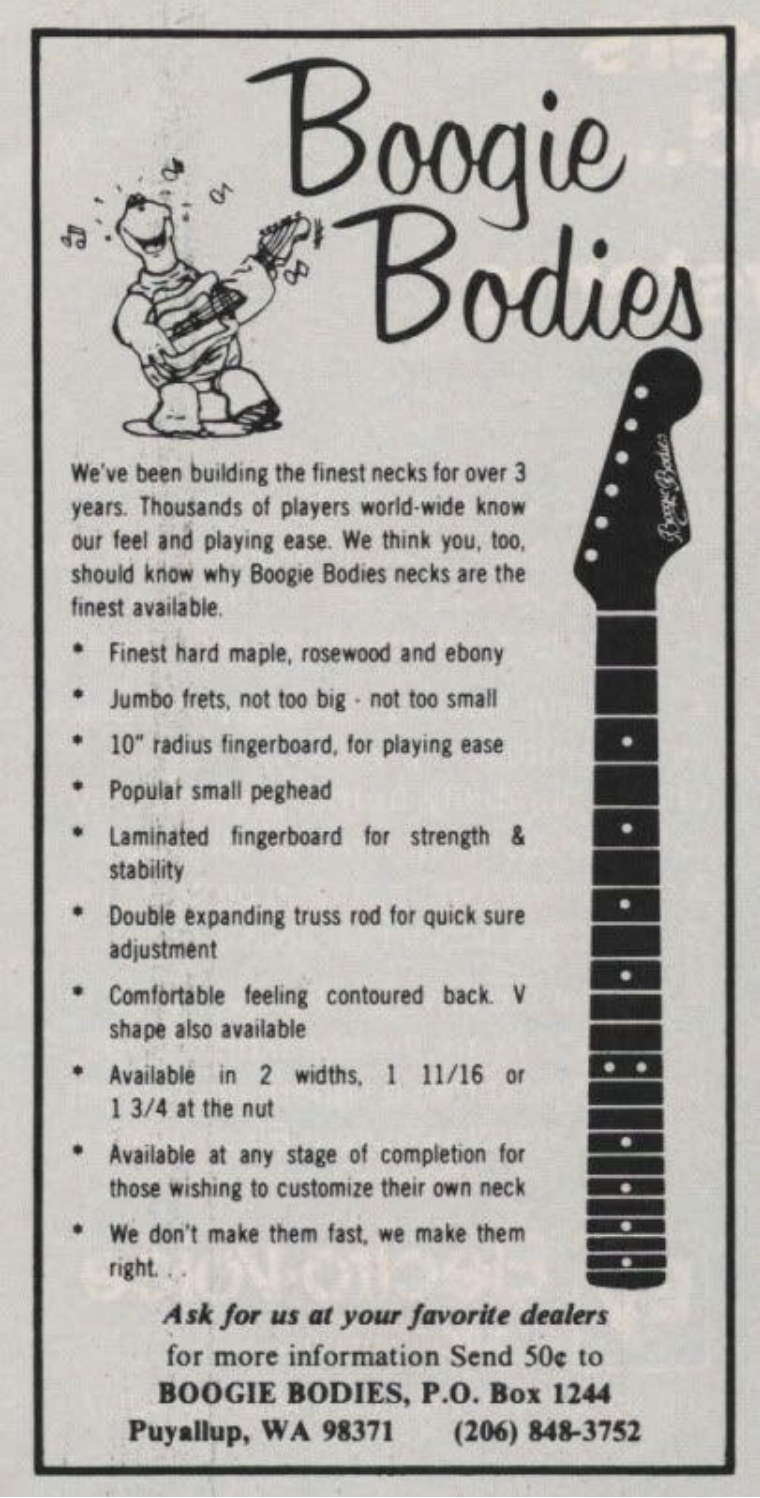
Lynn changed the business name to “Boogie Bodies” and began making numerous guitar bodies and necks for rock stars such as Eddie Van Halen and Billy Gibbons through Charvel Guitars.
Lynn shifted his focus away from furniture manufacturing and began crafting guitar bodies from exotic woods. Unlike most solid-body guitars of the era, his designs featured chambered, or “hollowed-out” bodies that reduced weight while enhancing resonance. The guitar bodies quickly gained popularity, prompting Lynn to rename the company Boogie Bodies in 1976. Seeking to build complete guitars, he soon expanded production to include guitar necks. These necks developed a reputation for their distinctive quality and character, often described as having a certain “mojo,” and became highly sought after. The completed guitars were equally well received. Among his customers was Eddie Van Halen, who purchased both a Boogie Bodies neck and a body through Charvel Guitars.
VanHalen’s “Franky” Erupts!
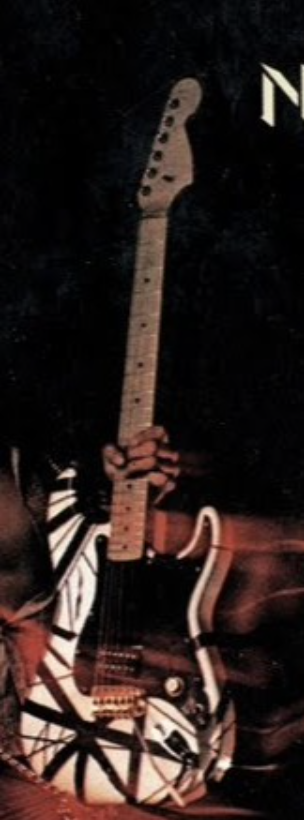
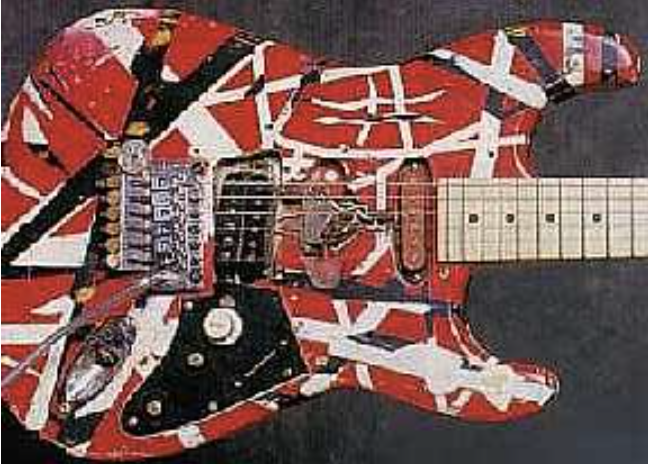
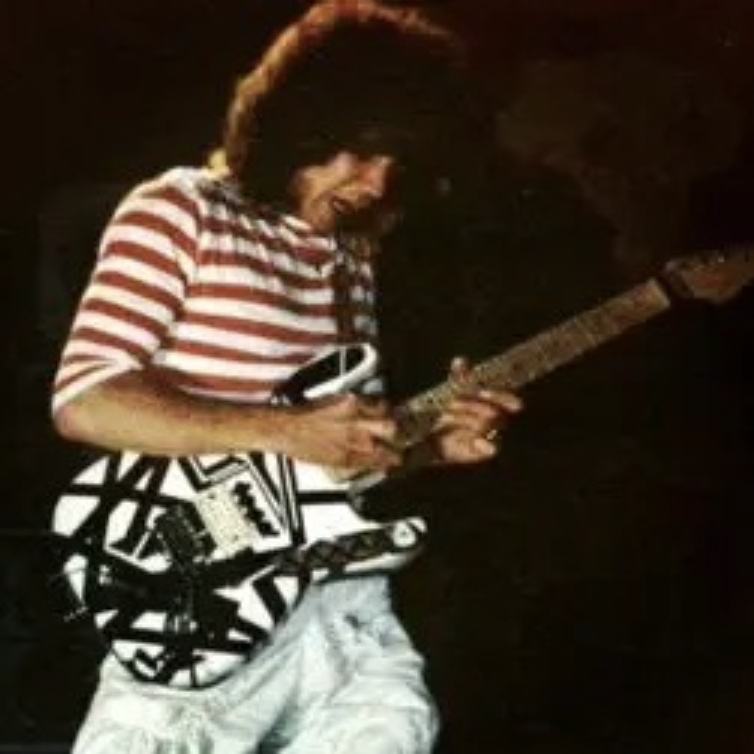
When Van Halen released its debut album in 1978, the cover featured Eddie Van Halen holding his iconic guitar, “Franky.” Guitarists around the world soon sought to replicate both his groundbreaking tone and distinctive look. Throughout Eddie’s illustrious career, Lynn supplied numerous guitar necks and components that helped shape and refine Van Halen’s evolving sound and playability. As demand for Eddie-inspired guitars grew, Boogie Bodies was inundated with orders for necks and guitar parts from individual builders as well as leading guitar manufacturers, including Charvel Guitars, Jackson Guitars, Mighty Mite and DiMarzio.
Clapton’s Ax, Anthony’s Bass in Zebrawood!
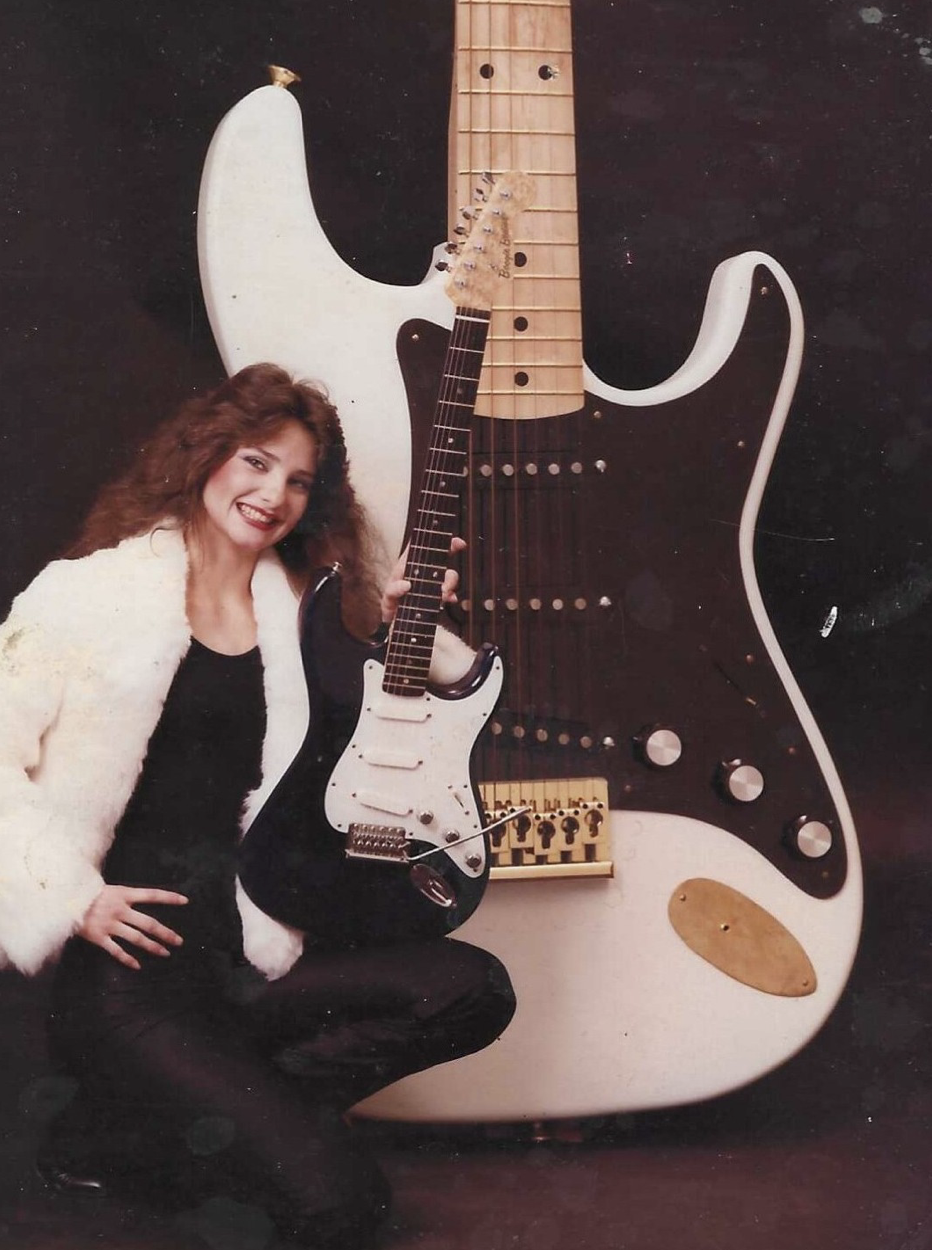
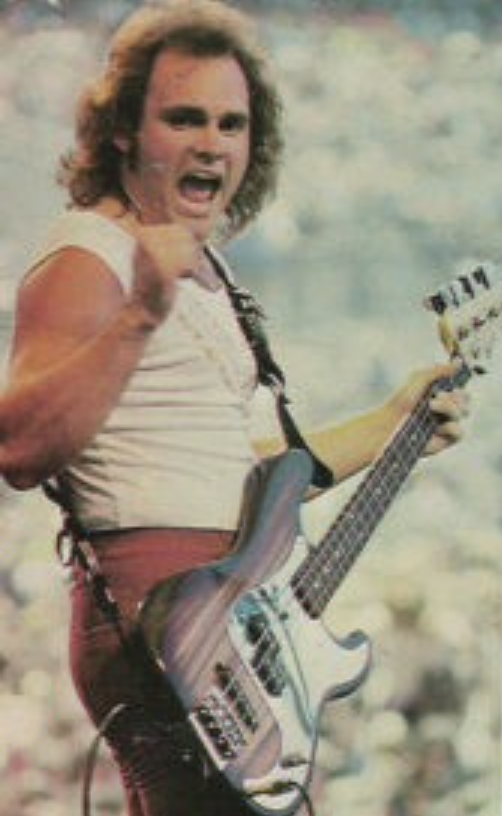
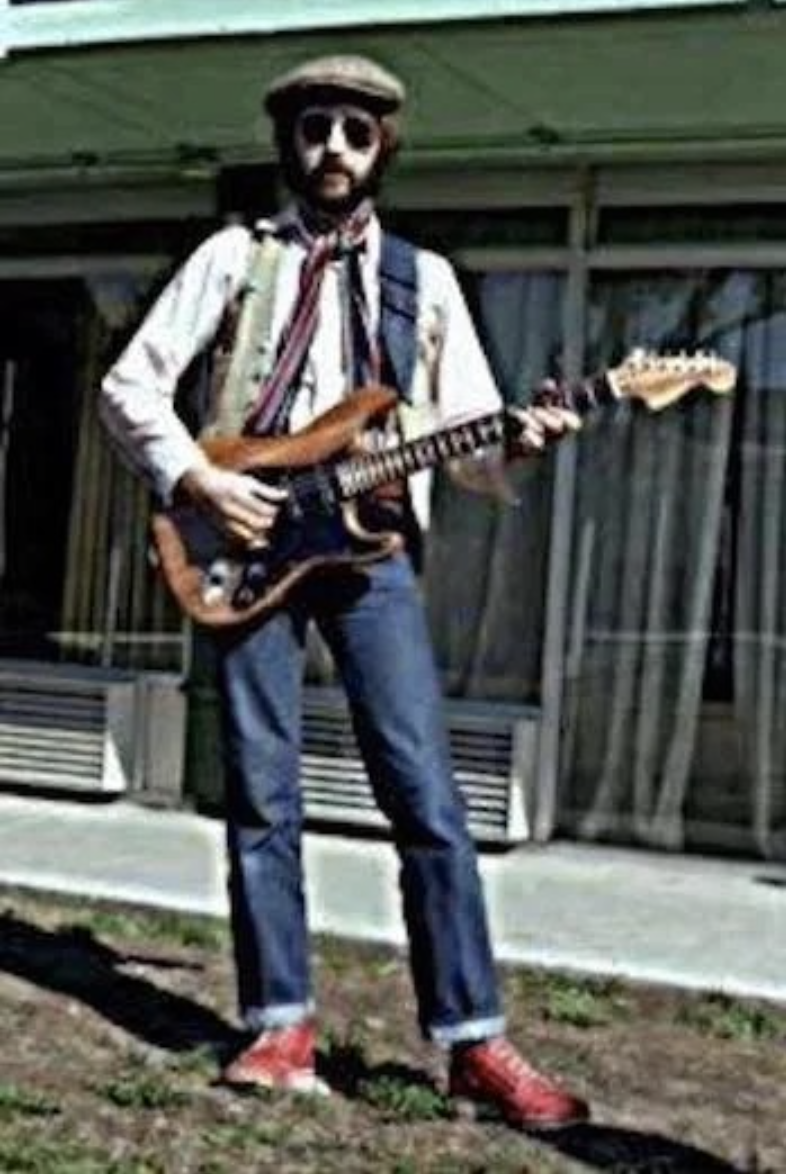
Soon, professional guitarists around the world, including Pete Townshend, Joe Walsh, Manny Charlton, Roger Fisher, Bobby Cochran, Jerry Cantrell, Micheal Anthony and Eric Clapton, were playing Lynn's Boogie Bodies guitars.
As word spread about their exceptional craftsmanship, the instruments earned a reputation among both touring musicians and recording artists. Anthony’s Charvel bass was made by Boogie Bodies.
Lynn introduces EVH to Floyd Rose
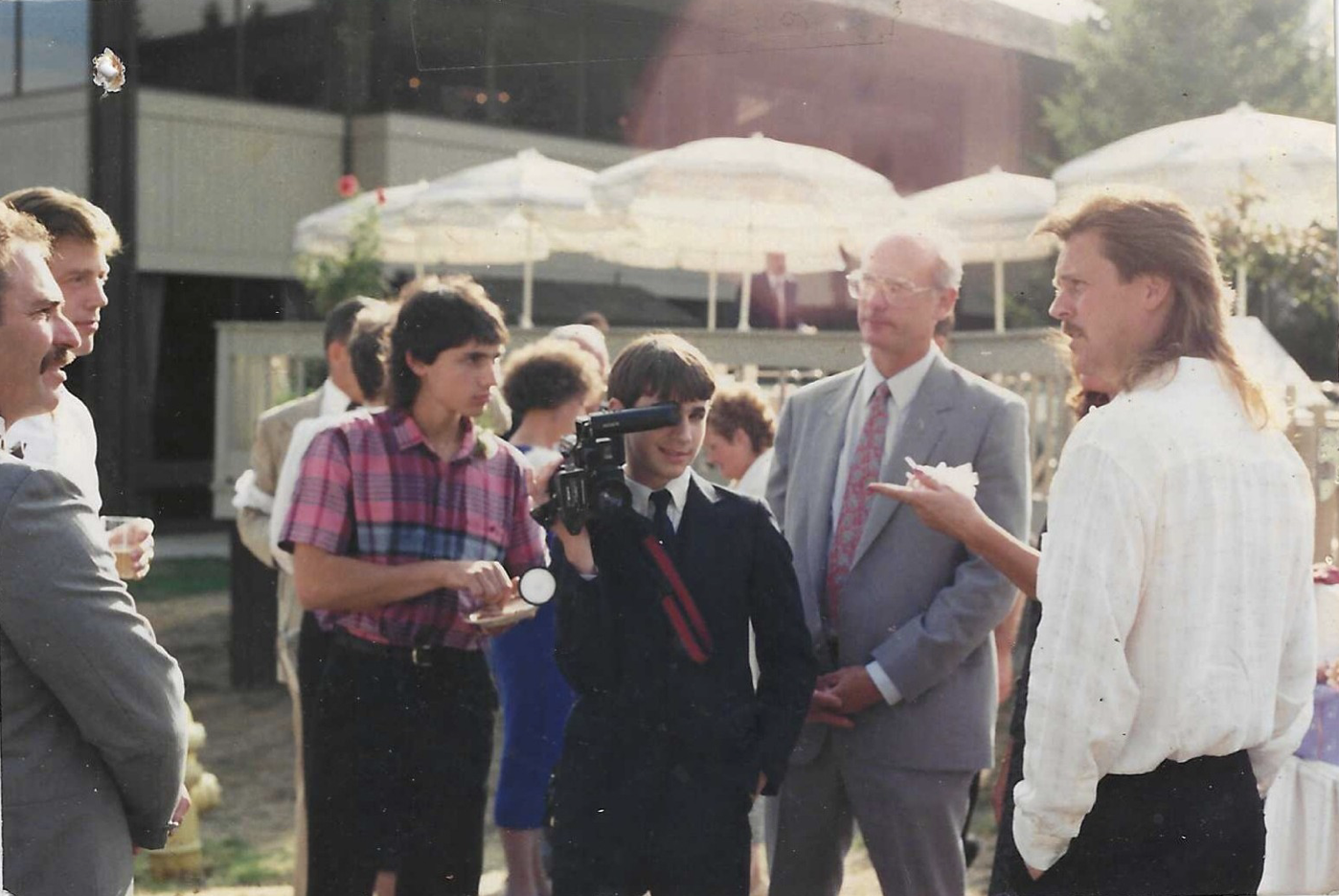
Floyd D. Rose began developing what would eventually become the Floyd Rose Tremolo in 1976. Around that time, he approached Lynn, who was watching a guitarist perform on one of his instruments. Floyd, then a jewelry maker, possessed the precision tools and metalworking expertise needed to fabricate small mechanical components. He shared with Lynn his innovative tremolo bridge design, which could remain in tune despite aggressive dive bombs, pull-ups, and other extreme vibrato techniques.
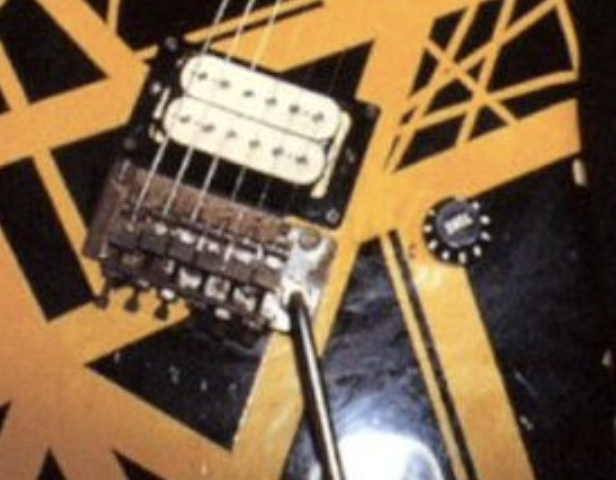
Recognizing its potential, Lynn and Floyd introduced the prototype to Eddie Van Halen. Combining Floyd's engineering ingenuity with Lynn's craftsmanship, they installed the bridge on Eddie's iconic "Franky" guitar and his VH-II guitar. The modification not only enhanced Eddie's already groundbreaking playing style but also helped revolutionize tremolo systems and electric guitar design for generations to come.
EVH Installs Boogie Body Neck on VH-II
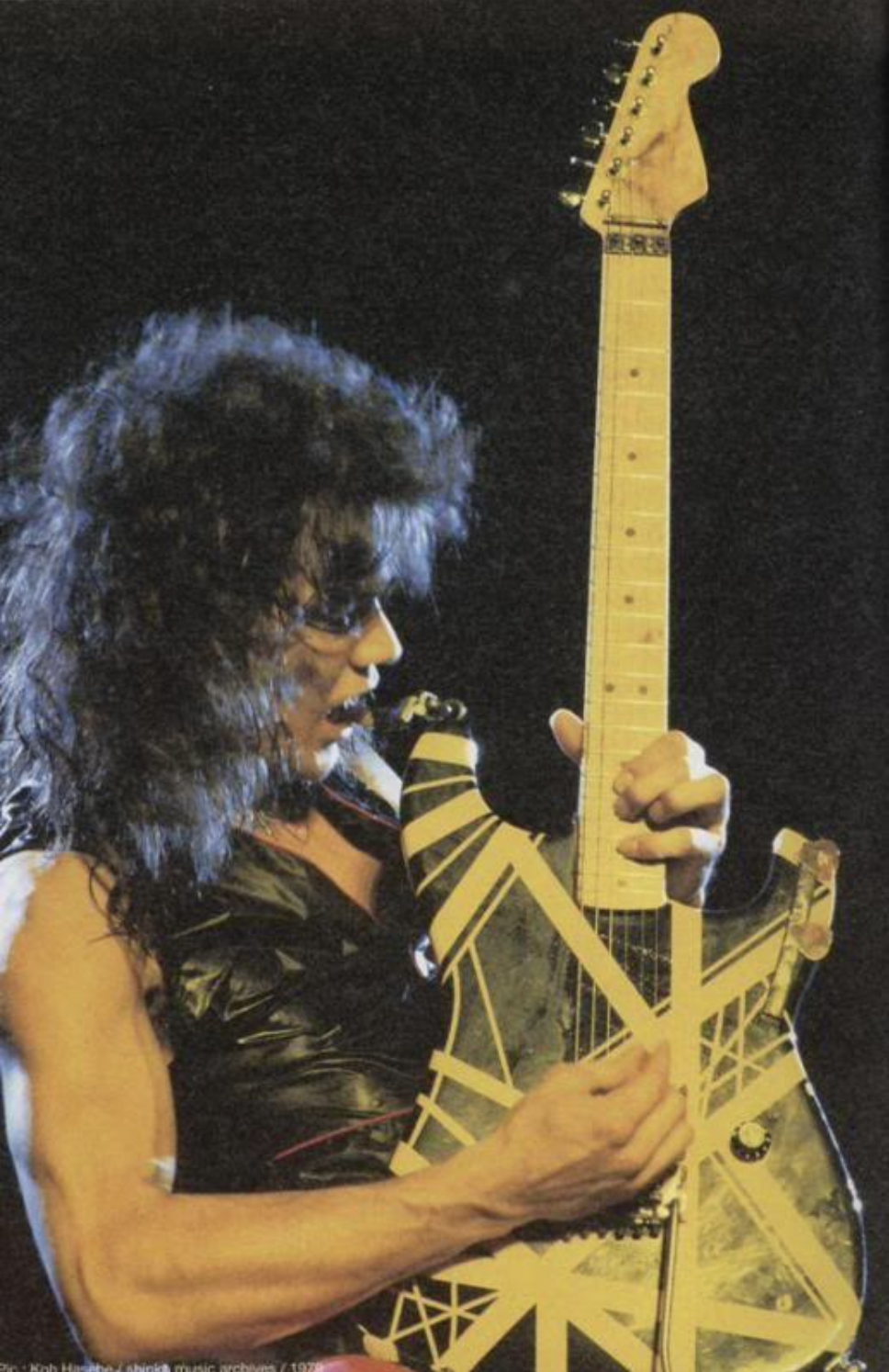
Franky was not the only EVH guitar enhanced by Lynn. As an example, In 1978, Eddie switched necks to this “knotty headstock” Boogie Body.
Lynn Builds EVH’s “Rude/Circles/Rasta”
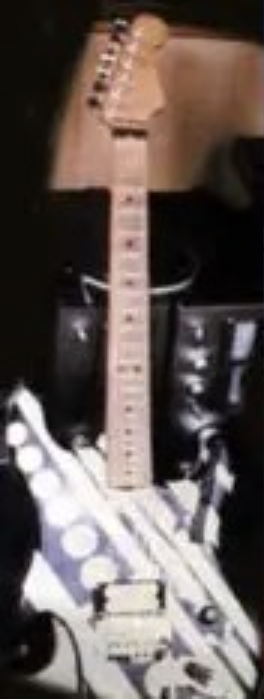
In 1980, Lynn Ellsworth built another guitar for Eddie Van Halen using a 2-inch-thick mahogany body. The additional mass was intended to help tame some of the bright high-end frequencies associated with the early Floyd Rose tremolo system. Eddie named the guitar "Rude," although it would later undergo several visual transformations and acquire different nicknames along the way.
The name "Rude" was reportedly painted inside the neck pocket and is believed to reference Eddie's friend and longtime guitar technician, Rudy Leiren. While some fans have speculated that Rudy may have helped assemble or paint the guitar, no verified evidence has surfaced to confirm his involvement.
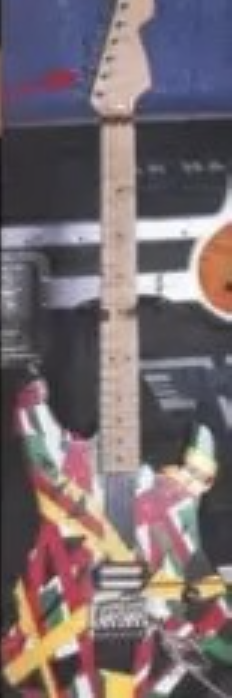
Over the years, the instrument appeared in several different finishes. When painted with colorful circles, it became known simply as "Circles." Later, after being refinished with black, yellow, white, green, and red stripes, it became known as "Rasta."
Although the guitar is most closely associated with the Fair Warning era, Eddie did not primarily use it because of its appearance. Instead, it served a practical role during the Fair Warning tour. The guitar was kept in Drop D tuning and used as a backup instrument for songs that required the lower tuning, particularly material introduced during that period.
At the time, early Floyd Rose tremolo systems lacked fine tuners, making quick onstage re-tuning inconvenient. As a result, Eddie maintained dedicated guitars that were already tuned and locked in Drop D, allowing for fast instrument changes between songs. He eventually gave the guitar to Dweezil Zappa.
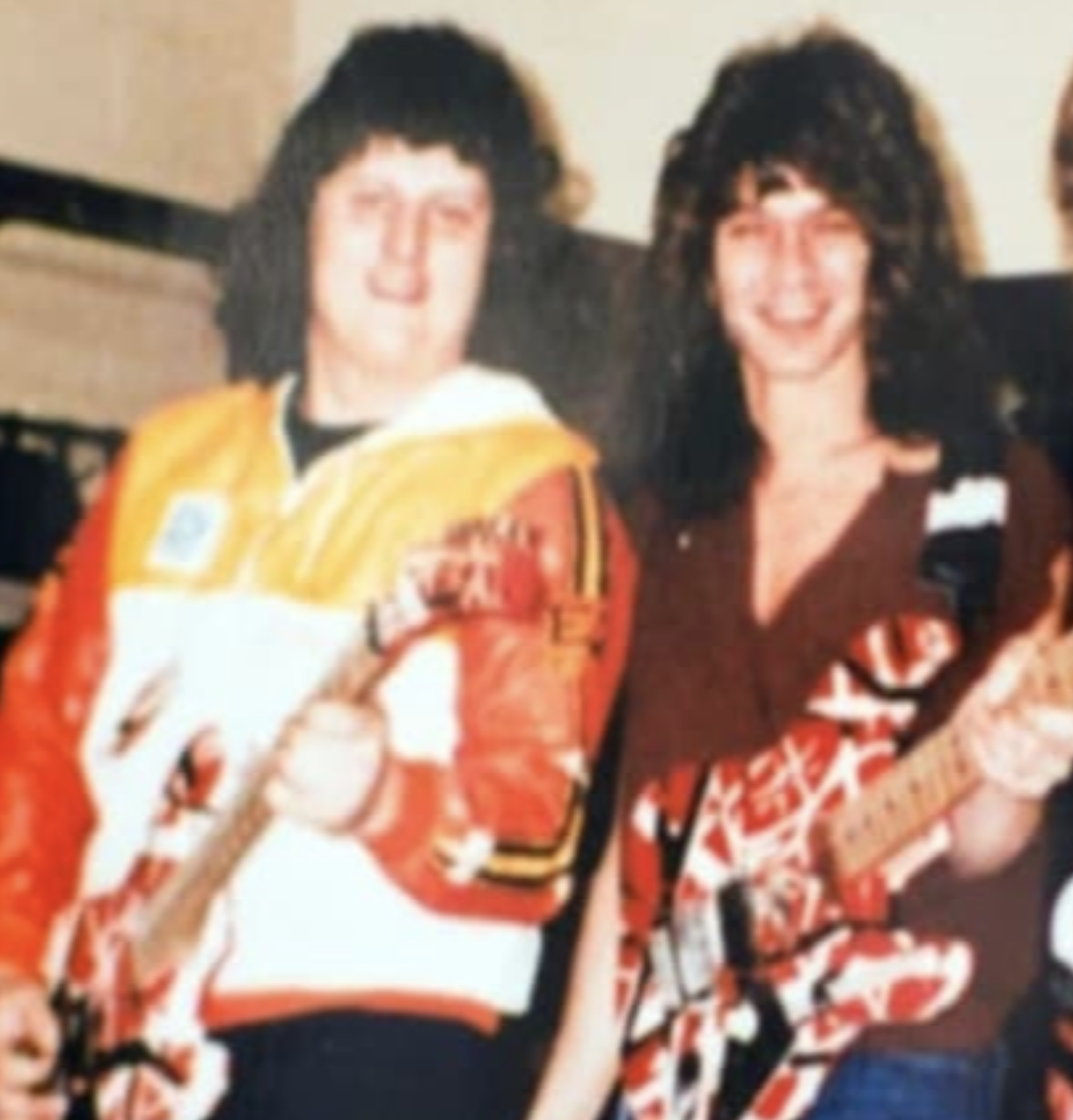
Around the same period, Eddie's wife, Valerie Bertinelli, contacted Boogie Bodies and ordered another mahogany body similar to the one used for Rude. An employee took the order and wrote the details directly on a body cut from the same piece of mahogany as the Rude guitar. For reasons that remain unknown, the instrument was never completed, and the unfinished body remains at the Lynn Ellsworth shop today, along with the neck templates and jigs. (Rudy and Eddie in photo, right.)
Lynn and Mike Hansen’s 2TEK Bridge
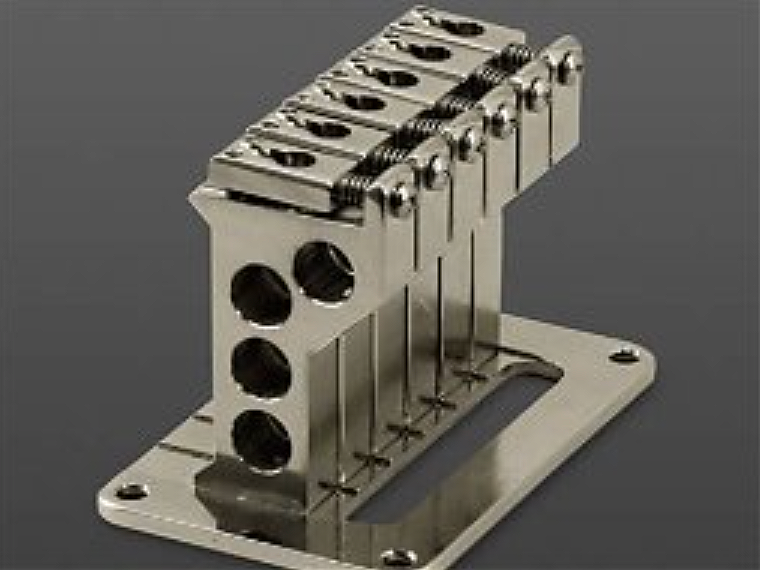
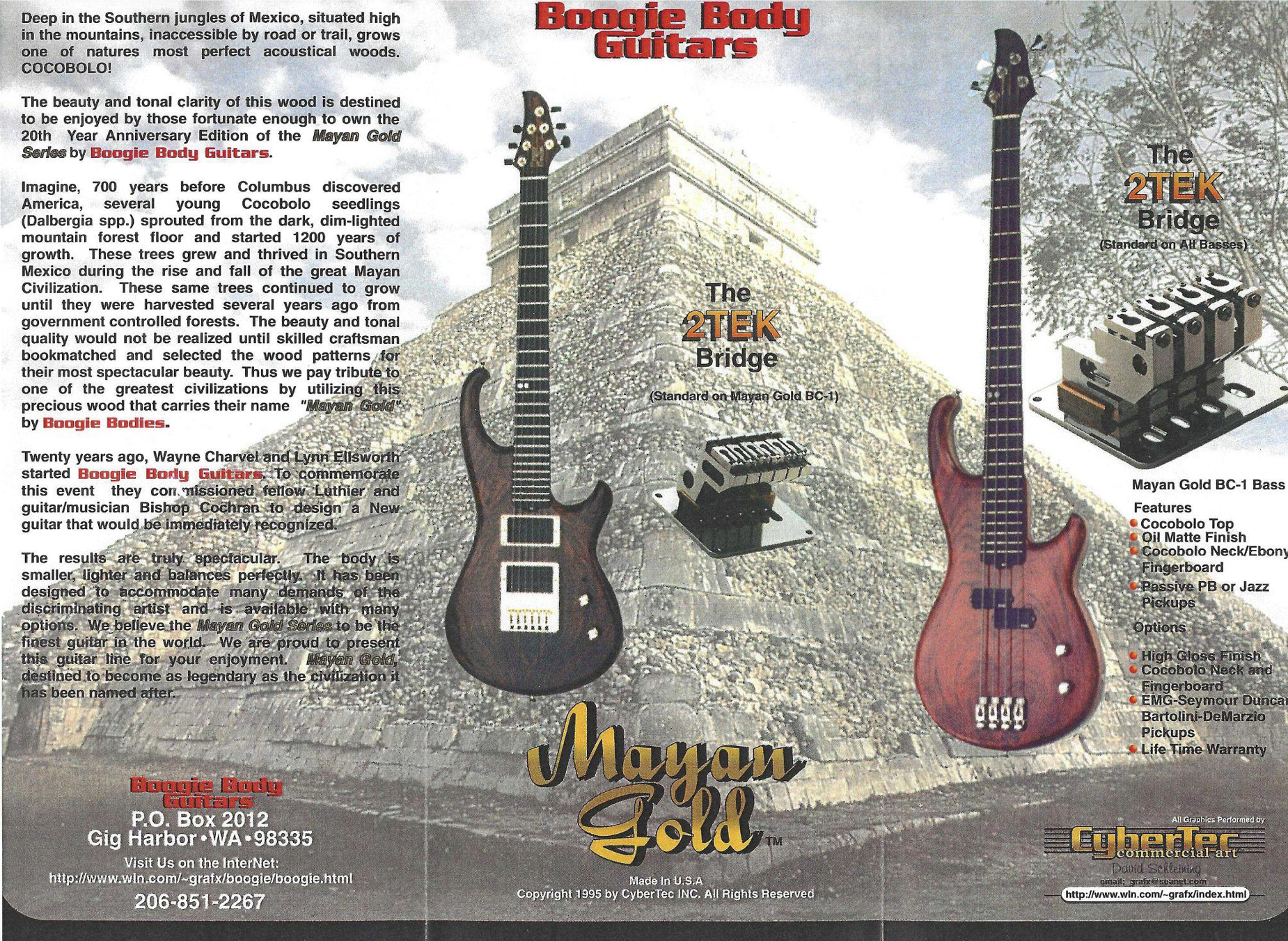
Boogie Bodies Released the Mayan Series!
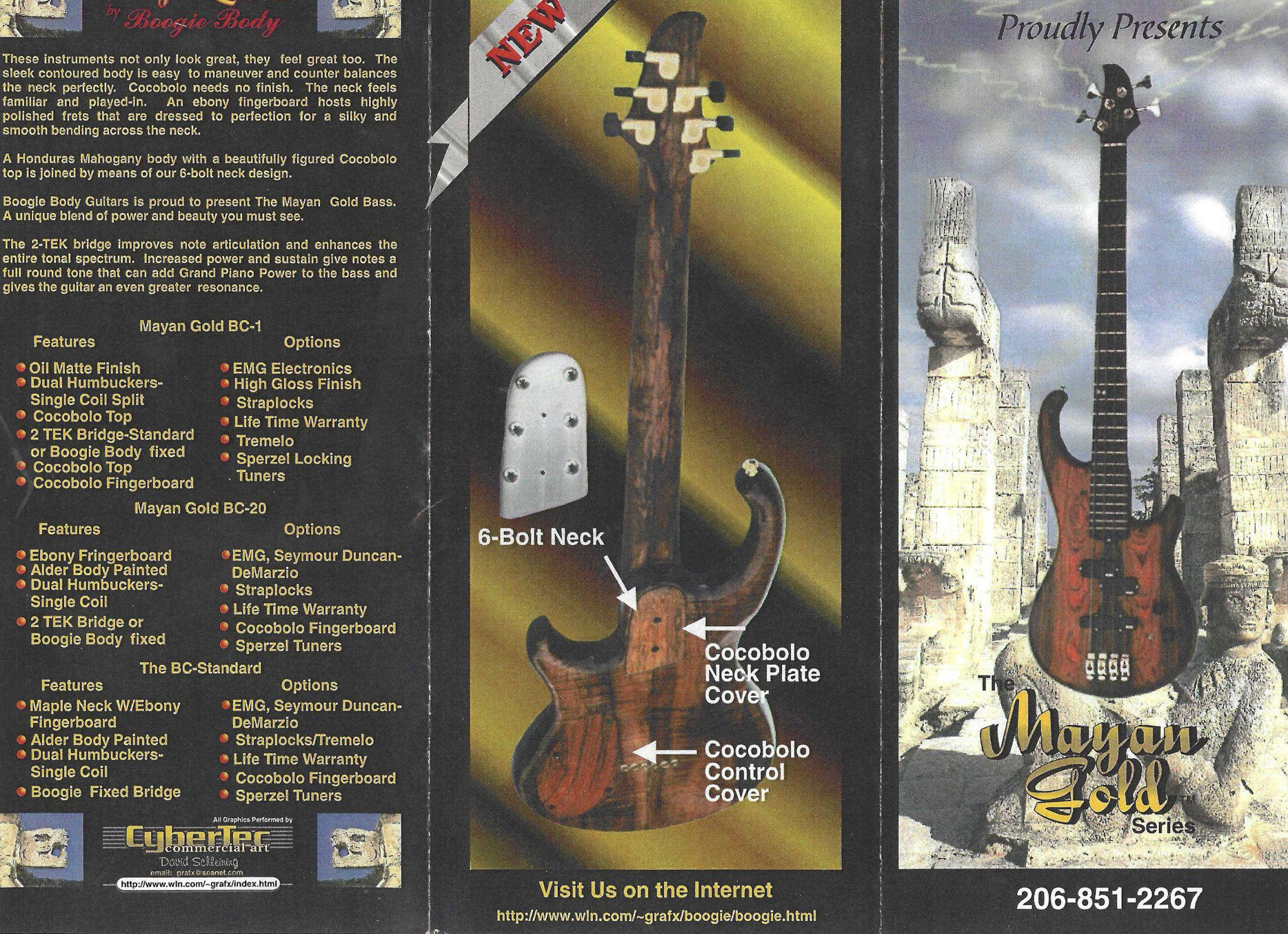
Designed by Lynn, the Mayan Gold Series was offered with either a Boogie Bodies fixed bridge or the groundbreaking 2TEK Bridge. Combining highly exotic woods, a streamlined body shape, and a distinctive new headstock design, these instruments stood out for both their appearance and craftsmanship. The original brochure says it all.
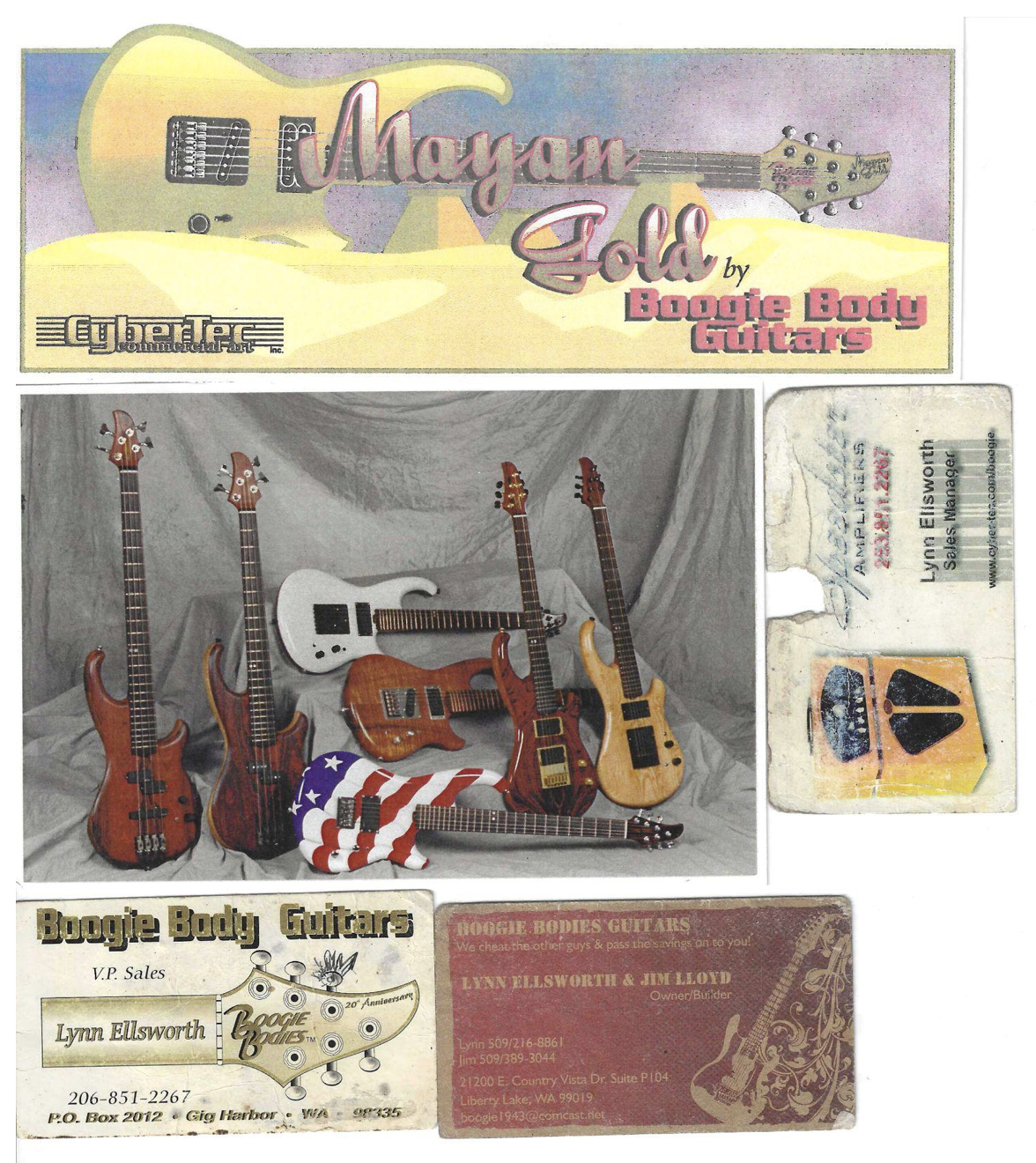
Speedster Amplifiers!
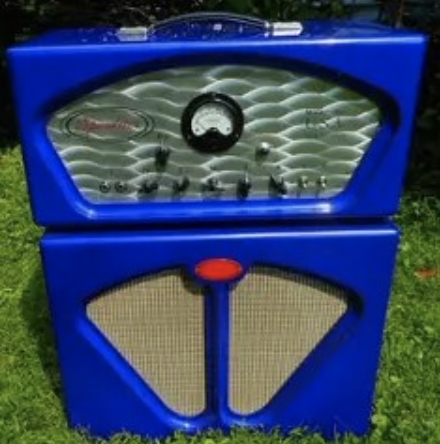
Speedster was founded in Gig Harbor, Washington, in 1995 by Boogie Body Music Products and quickly gained a reputation for unique aesthetics and robust construction. The brand’s flagship was the 25-watt Speedster Deluxe, a single-channel, Class A amplifier designed and built largely by Michael Soldano of Soldano Amplification.
Soldano’s involvement gave the amp a pedigree in high-performance tube design, while Speedster’s look drew comparisons to vintage radios. Production ran from about 1995 to 2000, with handmade builds in the USA using premium components like Mercury Magnetics transformers, Sprague Orange Drop capacitors, and low-noise metal film resistors.
Speedster Amplifiers was a boutique guitar amplifier brand known for its distinctive 1930s–1940s–inspired design and high-quality tube circuitry. The company’s story spans two distinct production eras, with the Speedster Deluxe as its most celebrated model.
By the early 2000s, Speedster had gone out of business. In late 2003, Joe Valosay and former owner Cory Wilds resurrected the brand as Speedster Amplifiers LLC. They rebuilt the company’s manufacturing facility and refined the Deluxe design, keeping Soldano’s circuit philosophy but improving production consistency.
The revived Speedster Deluxe became the brand’s flagship again, with production continuing into the early 2010s.
Lynn Ellsworth Guitars Opens Its Doors!
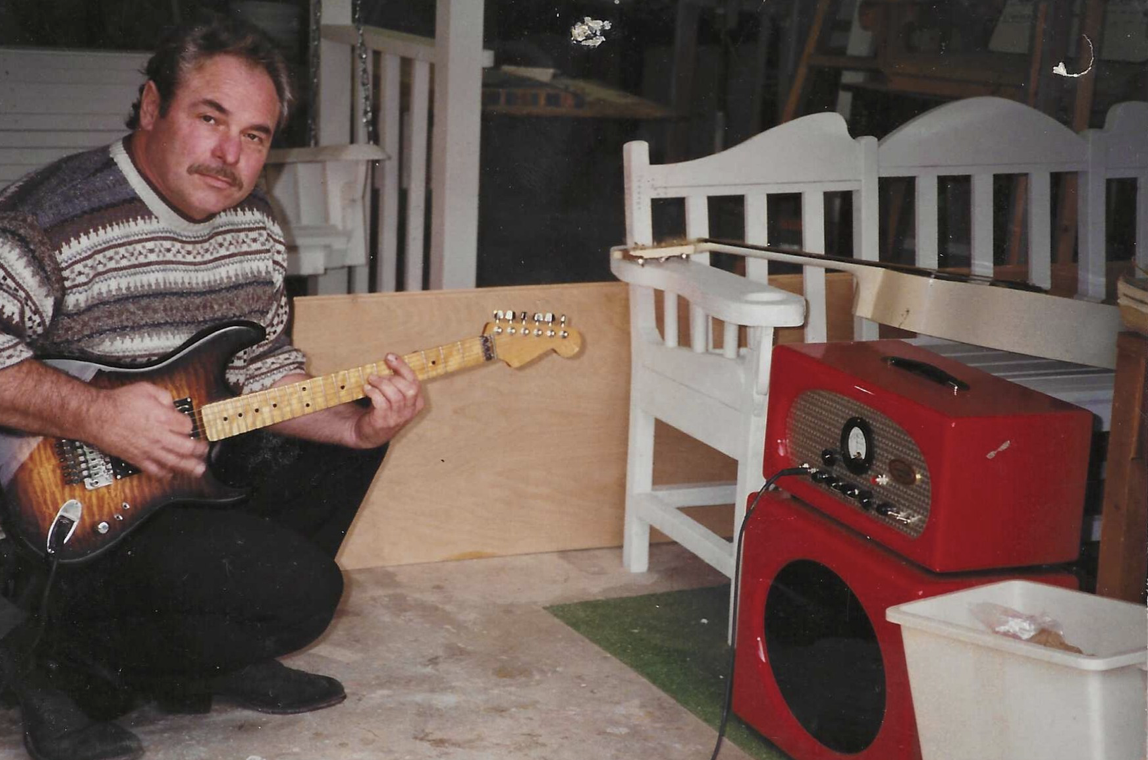
After parting ways with Jim Warmoth, Lynn teamed up with Wayne and briefly produced guitars under the "Charvel-Ellsworth" name. By 1981, Lynn felt it was time for a change of pace and transitioned into the pharmaceutical industry. During this period, he continued to pursue his passion for music by experimenting with Speedster Amplifiers and occasionally building guitars.
That all changed in 2012 when Patrick Coleman acquired several guitar bodies through a trade with his bandmate, Mike Revis. Among them was a coveted Boogie Body. At the time, Patrick was modifying and hot-rodding guitars for himself, his bandmates, and friends. While restoring the Boogie Body, he began searching for parts and tracked down Lynn's contact information. To his surprise, Lynn was living in the same city, Spokane, Washington, where he was working at a local metal fabrication shop.
When Patrick visited Lynn at his Spokane home, he was astonished by what he found: an impressive collection of completed guitars displayed throughout the house and stacks of beautifully crafted guitar bodies filling the family room. Seeing both extraordinary talent and untapped potential, Patrick immediately began encouraging Lynn to return to the guitar business. Confident that he could sell the instruments, Patrick proposed working together. Lynn responded with a challenge, jokingly saying, "Sell all these guitars by the end of the summer, and then we'll talk about opening a business."
As fate would have it, Patrick did exactly that. He sold nearly every guitar Lynn had available, and in 2013 the two officially launched Lynn Ellsworth Guitars LLC.
To help bring the new venture to life, Patrick invited Mark Martini, a longtime customer and devoted fan of Lynn's work, to become a partner and help fund the business. Mark didn't hesitate. Together, they invested in a dedicated facility, and construction of the shop was completed in August 2013.
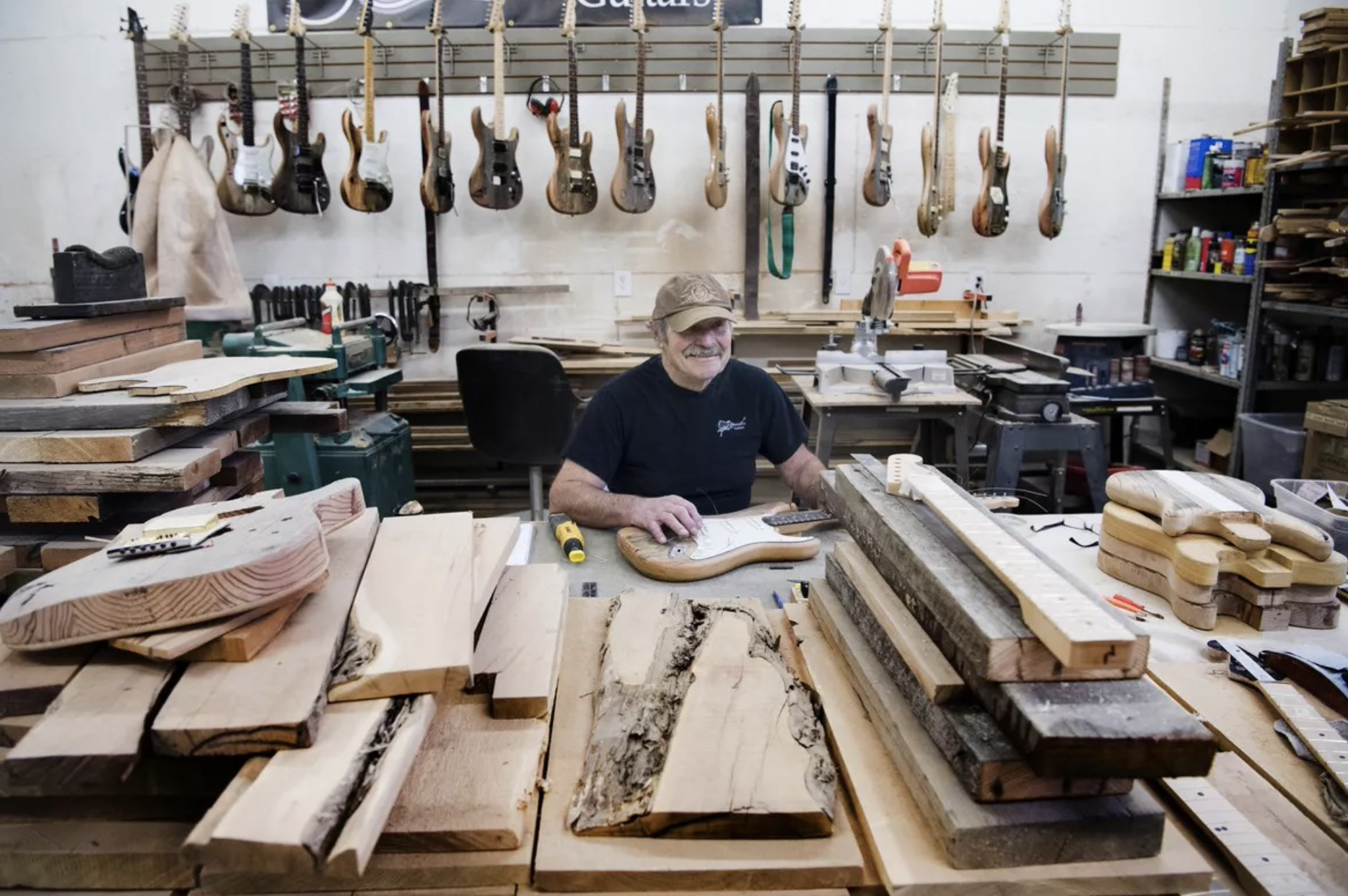
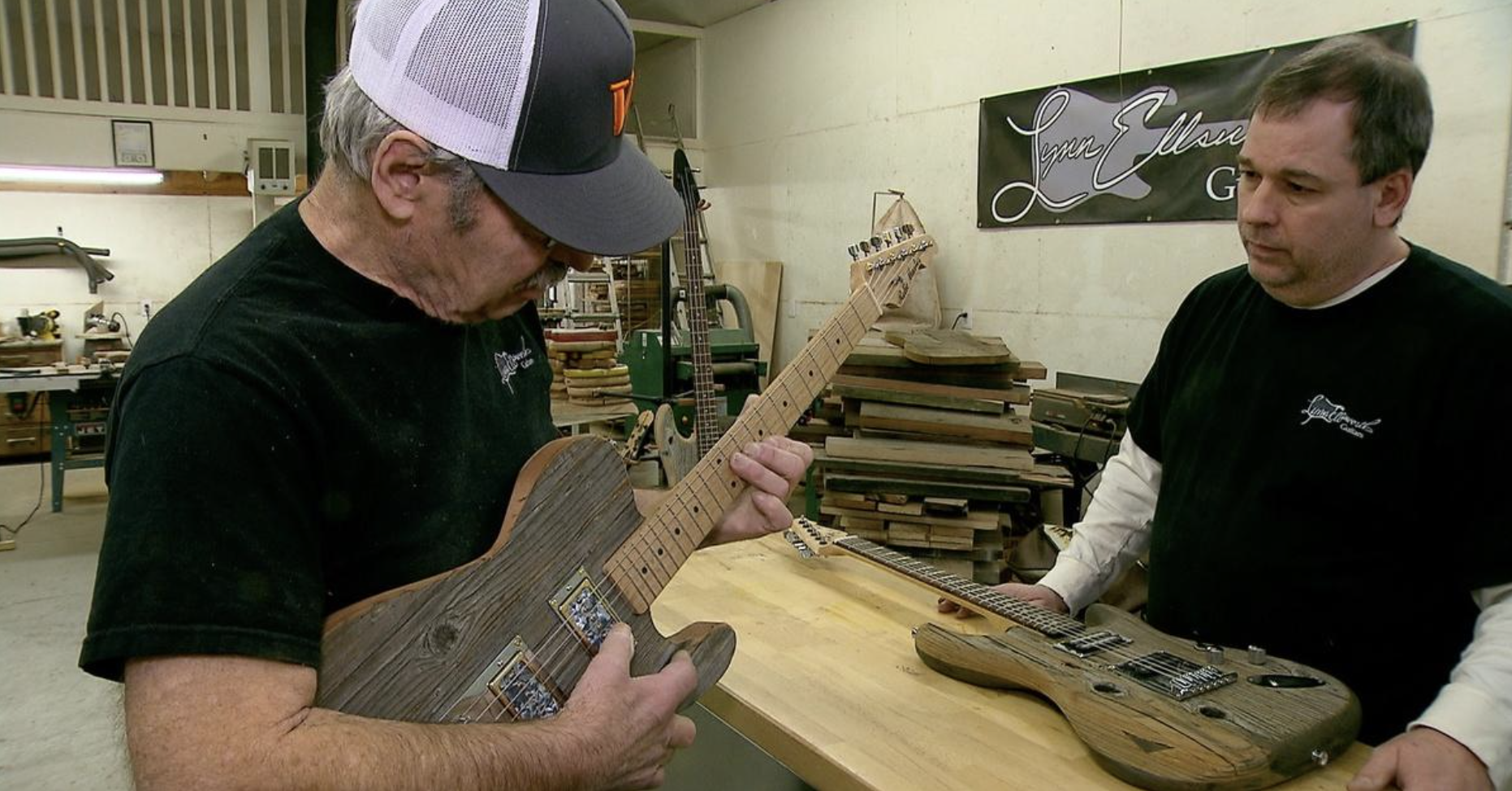
At the time, Lynn had begun building guitars from reclaimed cedar and redwood salvaged from old decks, fences, and docks. Patrick introduced colorful red fir into the lineup and developed a finishing process that enhanced the wood's natural character while refining its rugged appearance. They called these guitars and bass guitars "Relicmasters."
When production began that summer, the team built more than 100 Relicmaster bodies. Thanks to their distinctive look and affordable price point, the Relicmasters quickly became the company's best-selling line. While moderately successful, Patrick viewed them as a unique and accessible offering rather than the company's ultimate focus. His vision was to produce higher-end instruments inspired by the original Boogie Bodies, featuring premium exotic tonewoods, handcrafted construction, and custom craftsmanship. Just as importantly, these guitars would be built using the same jigs and templates that had been used to create instruments played by many of the legendary artists associated with the Boogie Bodies era.
As the company evolved, Patrick and Mark purchased Lynn's ownership interest and continued pursuing that vision. Tragically, Lynn passed away on April 27, 2024. Today, Lynn Ellsworth Guitars continues to build premium instruments using exotic tonewoods and the same handcrafted techniques that Lynn taught Patrick.
The company still relies on many of the original jigs and templates Lynn used throughout his career, while also incorporating modern technologies such as CNC (Computer Numerical Control) machining for models and components requiring exceptional precision. In addition to building custom guitars, Lynn Ellsworth Guitars specializes in vintage instrument restoration, with particular expertise in Boogie Bodies restorations and the use of original vintage components whenever possible. The company also provides repairs, setups, electronic modifications, and custom routing services.
"Lynn was more than a mentor to me. He was a great guy, very funny, a close friend, and someone I deeply respected. I hope he and the Ellsworth family are proud of the work we do as we strive to carry on Lynn's name and craftsmanship. I know I am, and I'm humbled by the opportunity to continue his legacy."
- Patrick Coleman